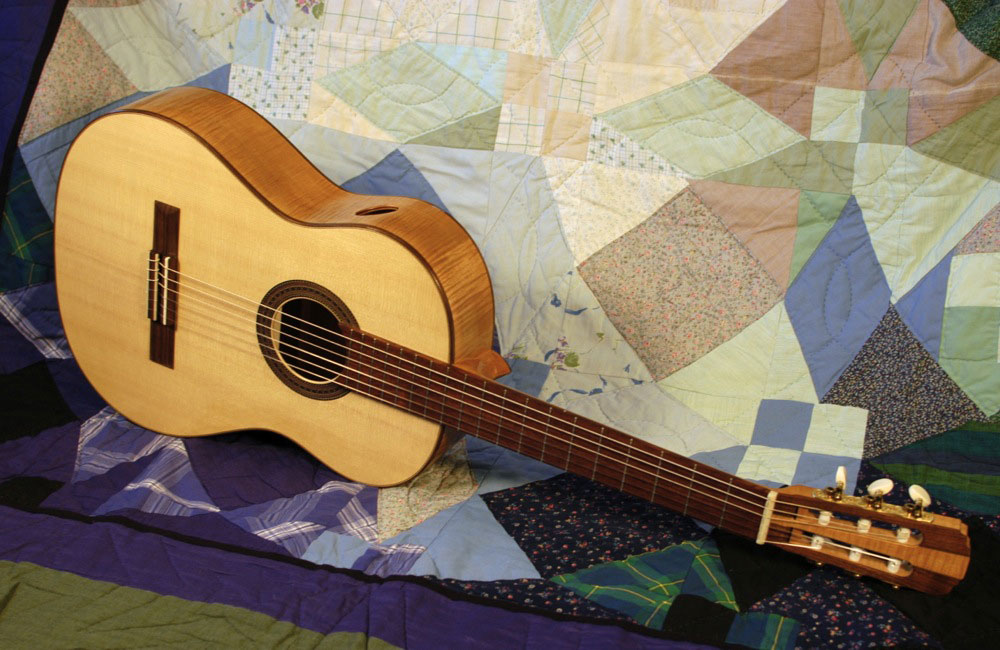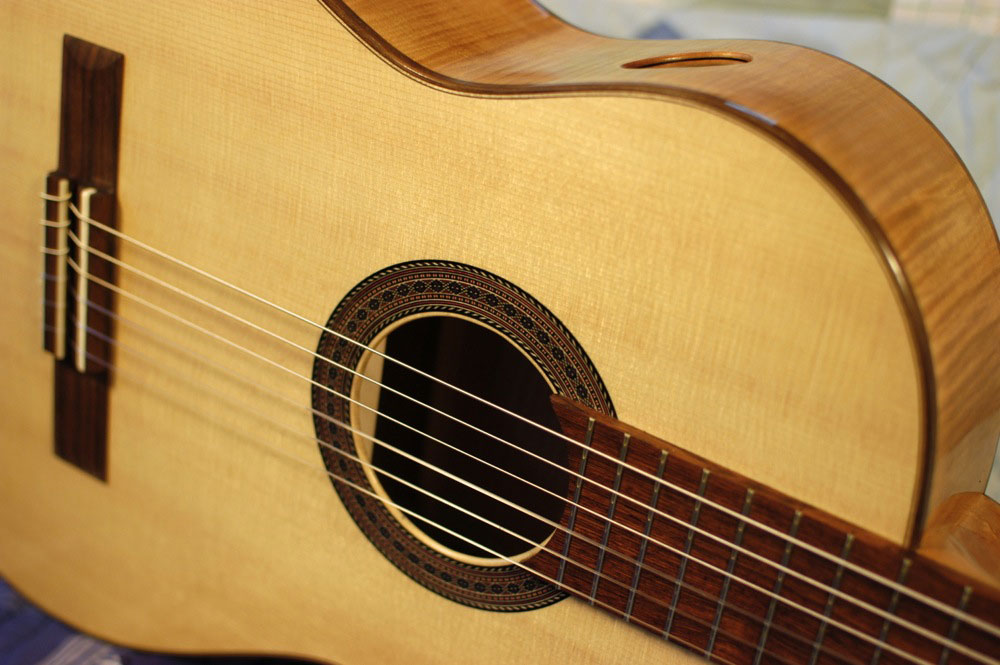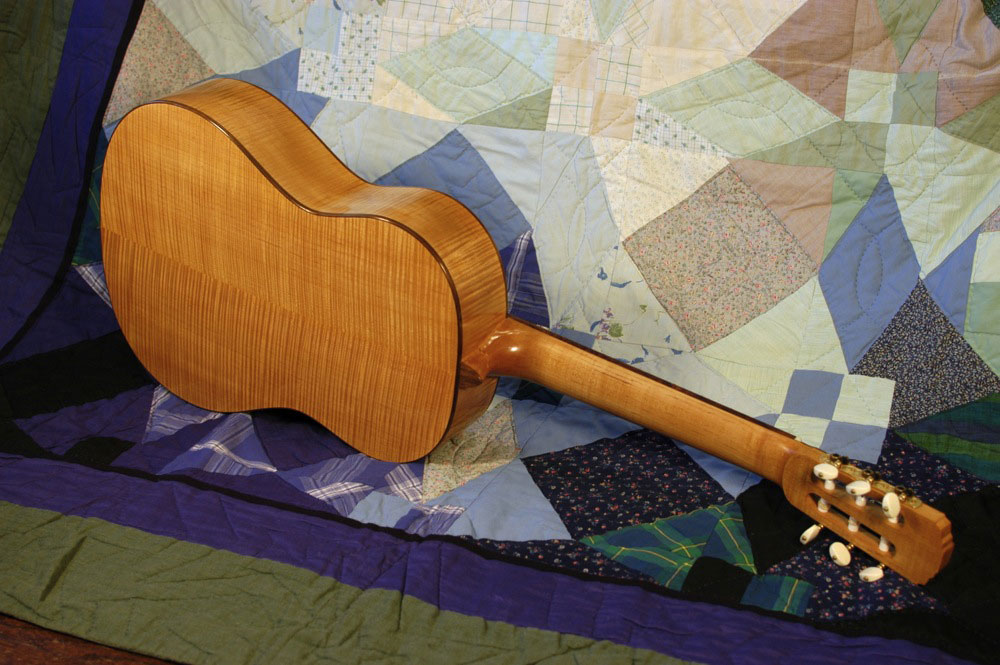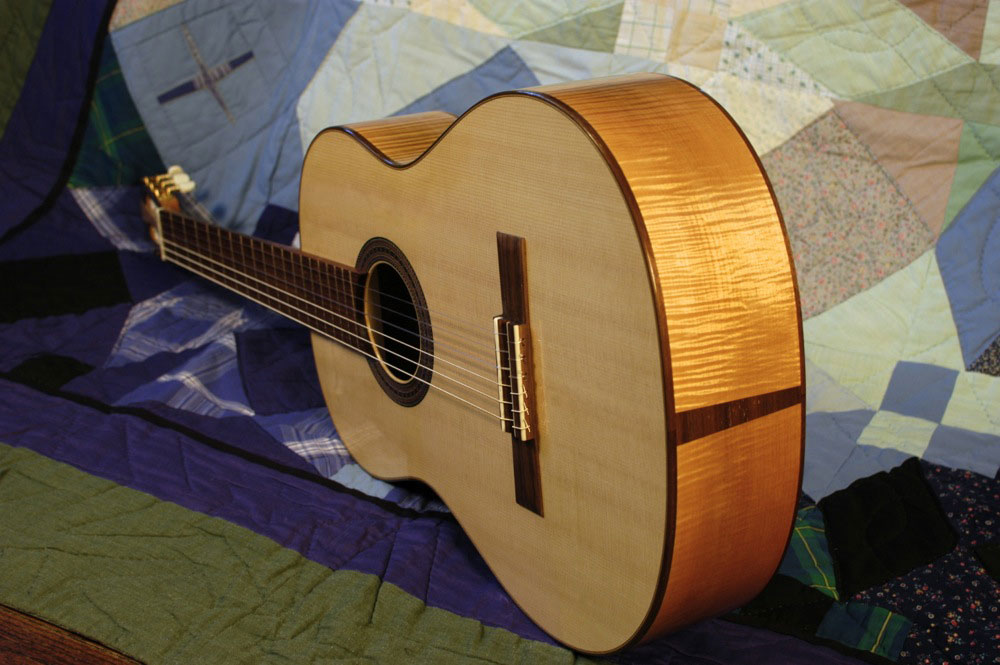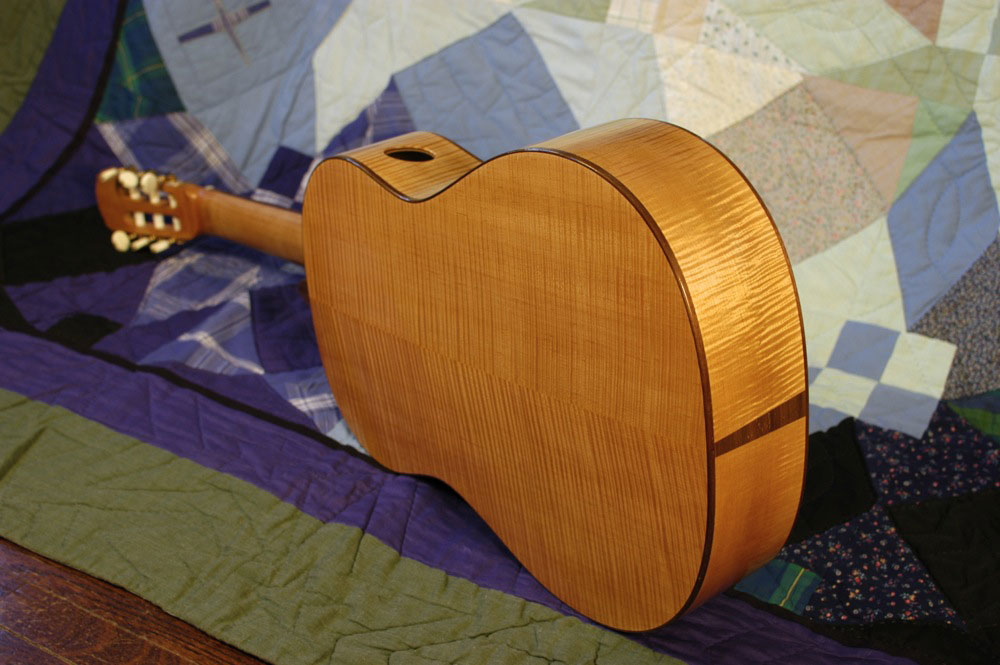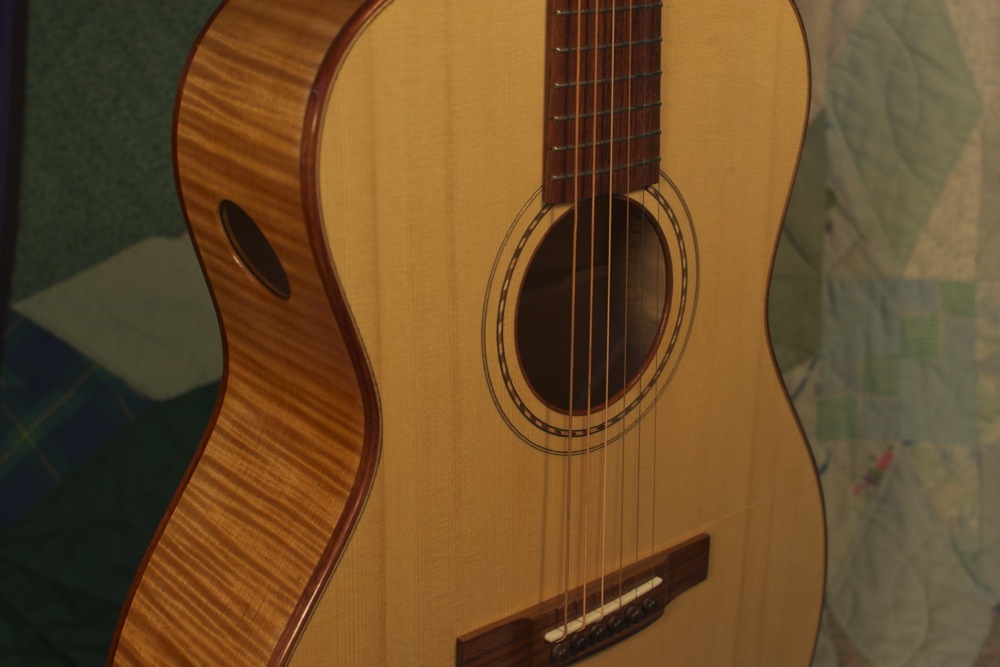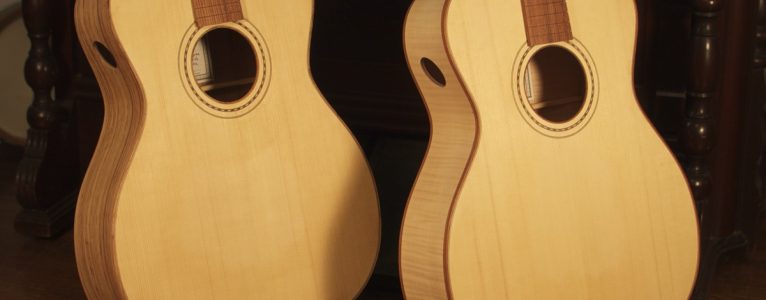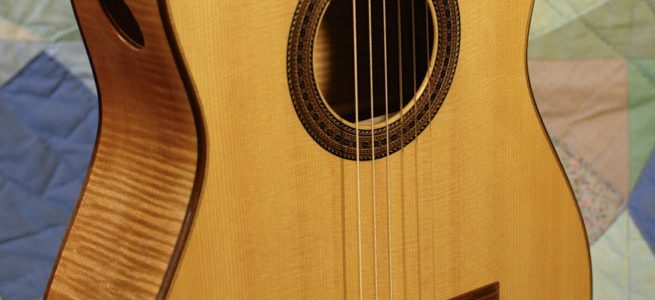
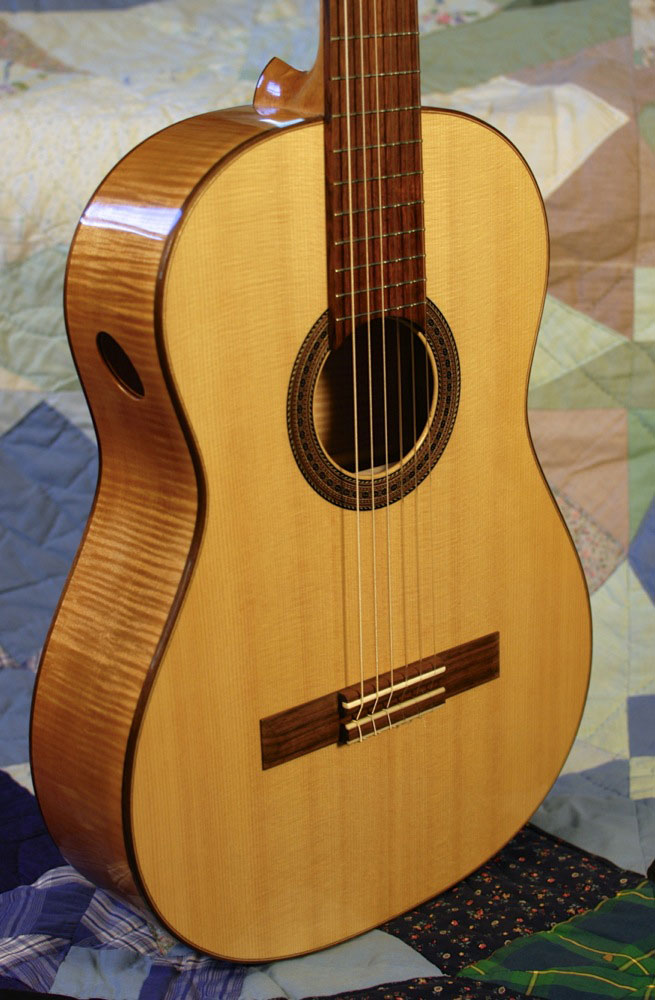
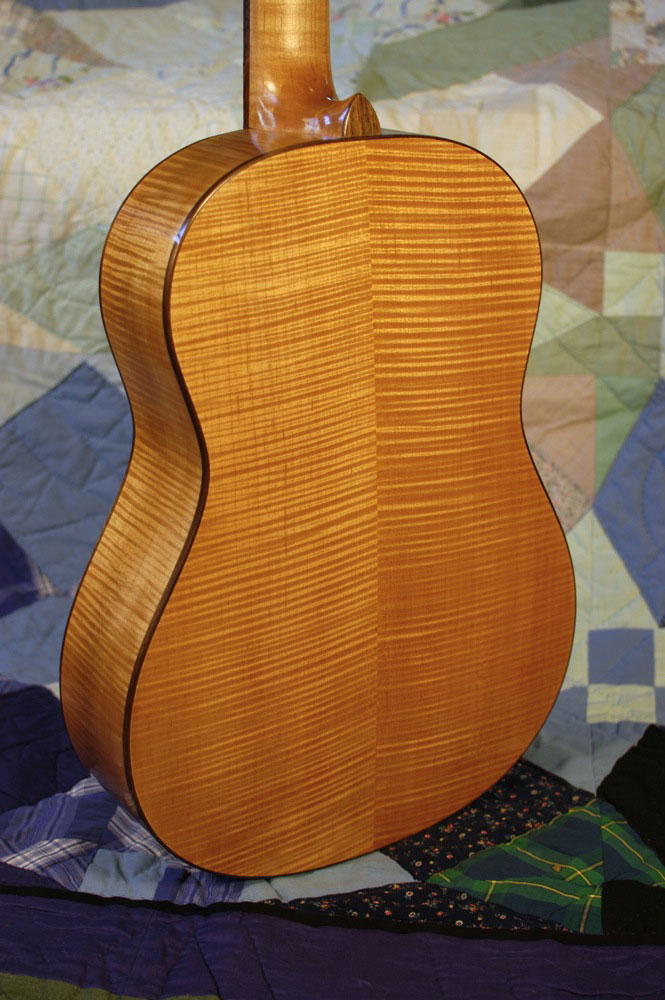
I have been enjoying playing my new classical prototype…a lot. The sound is a very good match to my taste, with a woody, full midrange and sparkly, fat trebles. The basses are solid and loaded with tone. Most importantly, the sound is consistent throughout the range and the instrument sounds great in quiet sections and even better when driven hard.

A short sample of the guitar’s sound.

In considering construction decisions for this Cavins classical, my primary inspiration was the guitar sound on the incredible Scott Tennant album “Guitar Recital.” The album was an instant favorite for me (thanks to my guitar teacher, who introduced it to me), and the sound of his guitar captured me right away. I’m sure that Scott Tennant could make any guitar sing, but I understand that the instrument on the recording was made by Miguel Rodriguez.

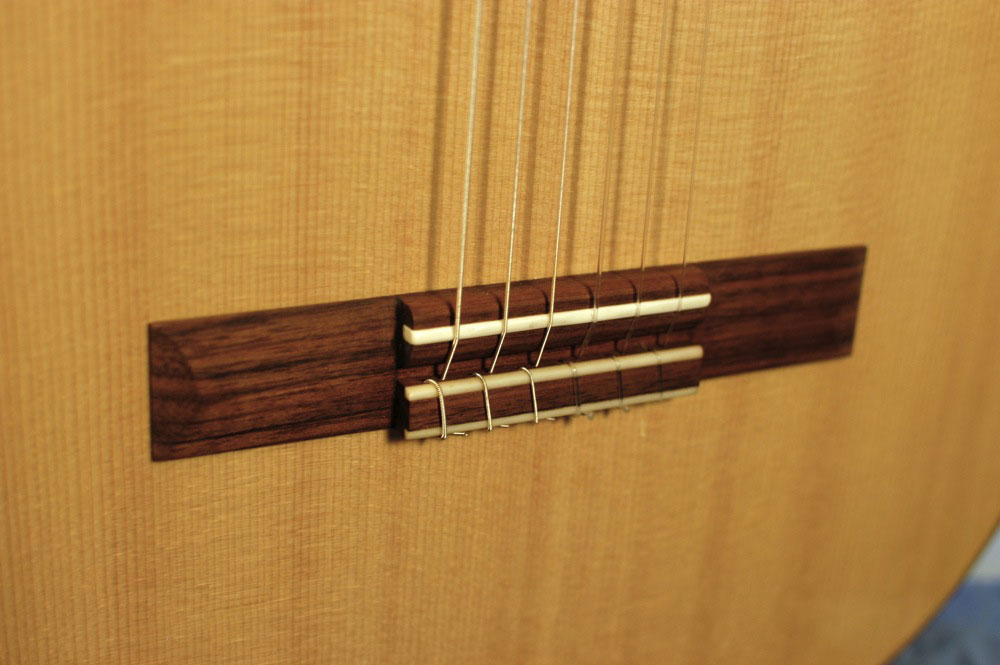
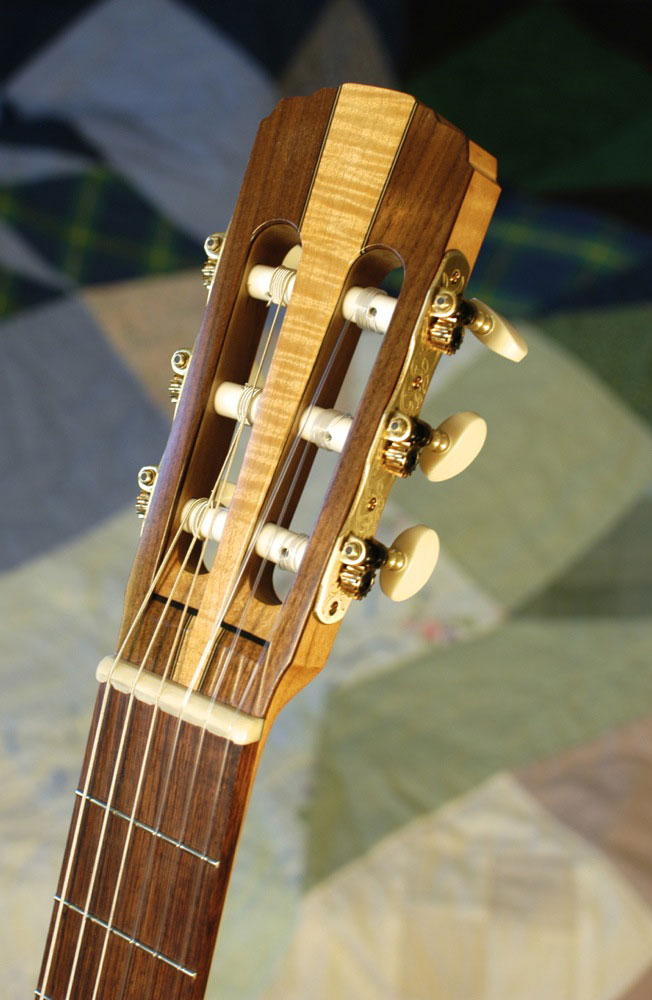
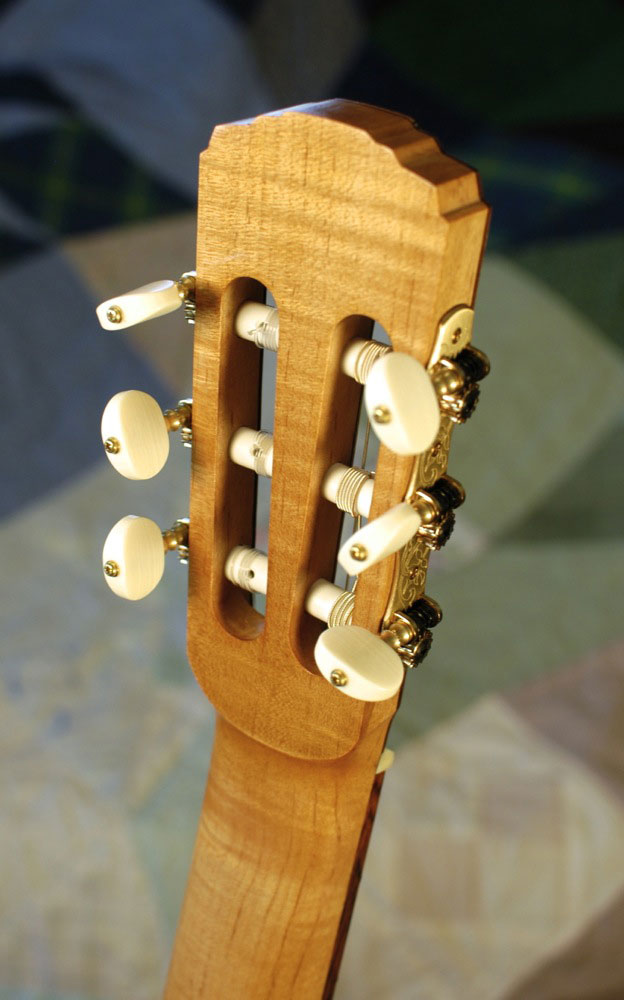
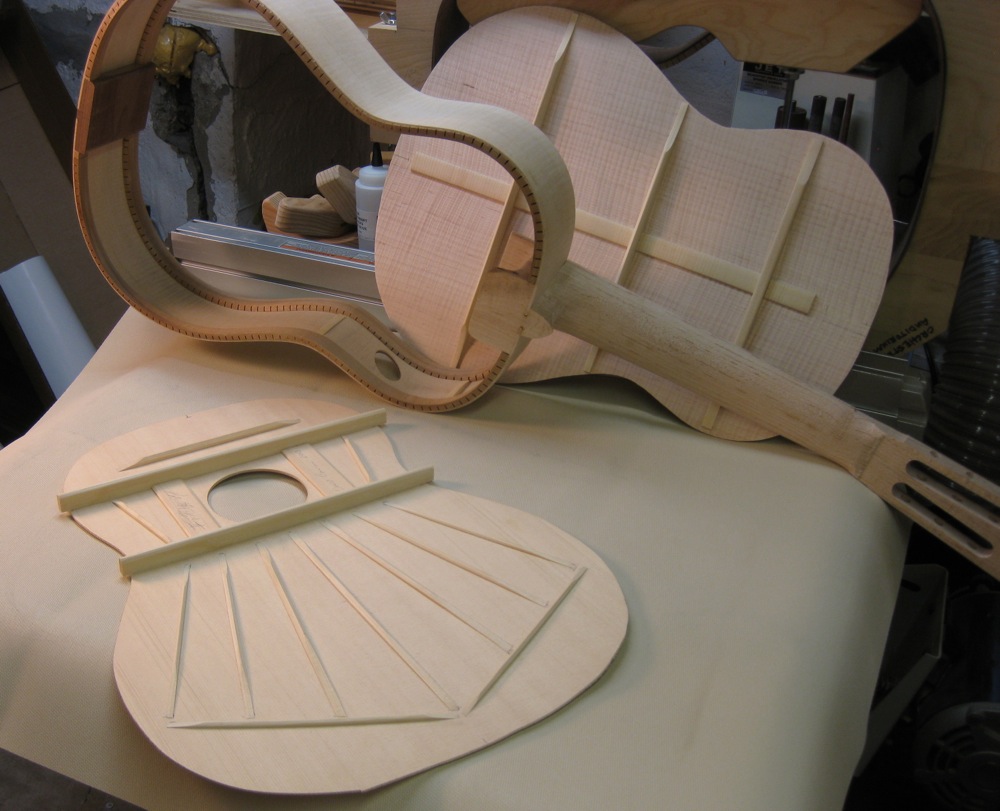
Since I knew I wanted a crisp, woody bass, I chose a stiff Engelmann spruce top and braced it using a very lightweight seven-fan bracing layout. To reinforce the midrange and trebles I chose red maple sides and back (in my steel-string experience, it produces lush trebles). The very lightweight black walnut bridge contributes to the percussive, lively attack. The fingerboard is Honduran rosewood, and the binding, end wedge, and other trim are black walnut. The sample audio was recorded while the guitar was strung with Augustine medium tension strings, although “hard tension” La Bella 2001s are an even better match for this guitar. I incorporated a sound port in the upper bout, and I’ve really enjoyed the immediate and transparent feedback that it provides the player.
While working on a repair a couple of weeks ago that required some hand planing, I realized that I couldn’t stand using my overlarge, rickety bench for another day. Maybe not even another hour. I’d been planning to replace my workbench with something better suited to how I work now, and the urge was suddenly implacable. So I tore it down and threw myself into finishing the new bench.

I tried to make most of the chance to re-imagine my workspace. A stout top and new storage topped the list.

It sounds strange to complain your bench is too large, but it dominated my small shop space, and it was large enough that there were areas I never worked on.  Those areas accumulated a jumble of offcuts, often-used tools, and bending forms. And then, when I did need a guitar-sized space to work, there wasn’t one. Continue reading “Workbench Improvements”

It was a little surprising to go from having a rim and top and back plates on the bench to suddenly having a guitar in my hands, ready for finish. “Whoa, so this is why people love to build classicals. It’s so much less work!” I thought.

Not exactly.

What makes it seem like magic to me is that the order of construction is very different than my method for building steel-string guitars. Continue reading “Classical Progress: The Instant Guitar”

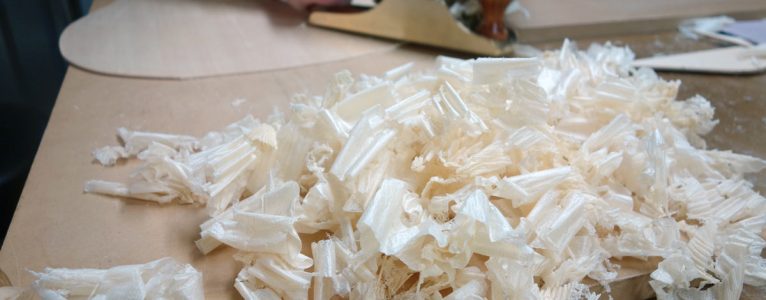
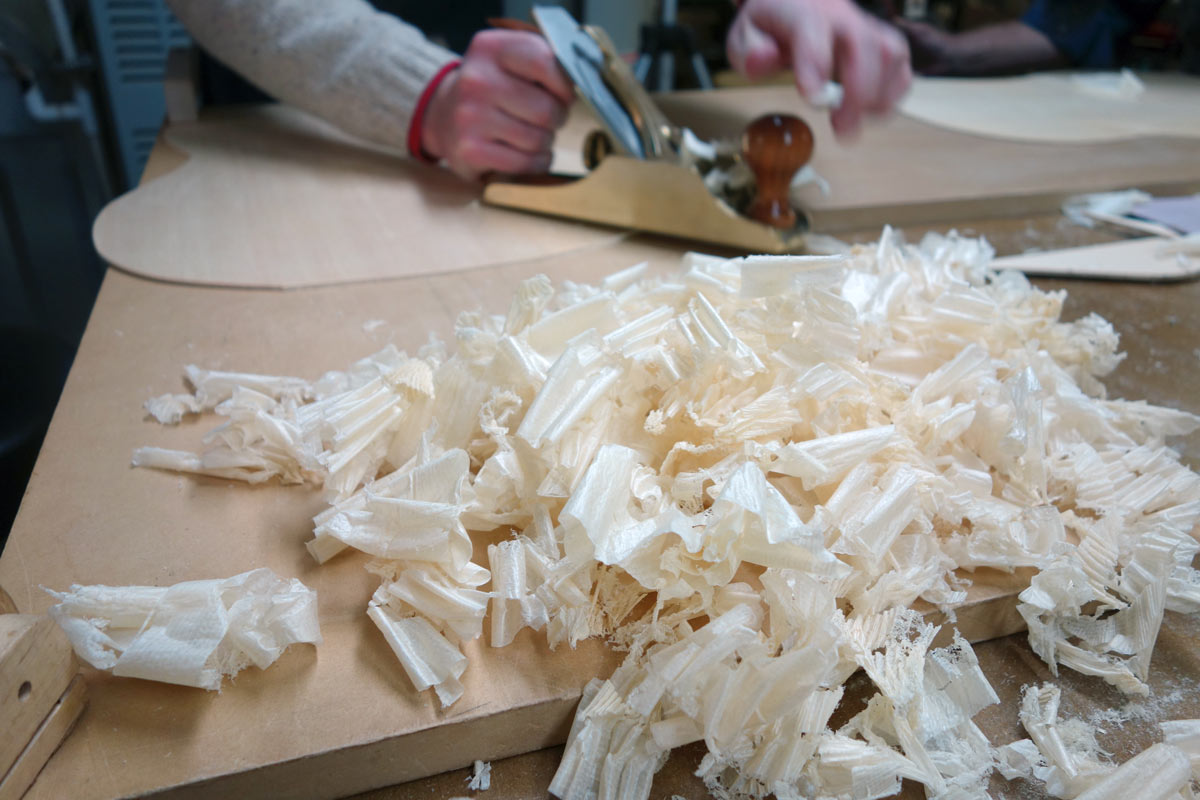
I'm using a razor-sharp hand plane to thickness this Engelmann spruce top. Photo by Denny Brown/Robbie O'Brien.
I’m using a razor-sharp hand plane to thickness this Engelmann spruce top. Photo by Denny Brown/Robbie O’Brien.
Recently, I spent some time doing two of my favorite things: using a hand plane on a premium spruce soundboard (Engelmann this time, still from Old Standard Woods) and dreaming about the next guitar. Using a sharp plane on a perfectly quarter-sawn top with almost no runout has got to be one of those tasks that zen masters describe to their students. The wood tells you what it wants to do, and you learn a lot about the piece of wood you’ve selected for your top. Continue reading “Classical Guitar Progress: Graduation”

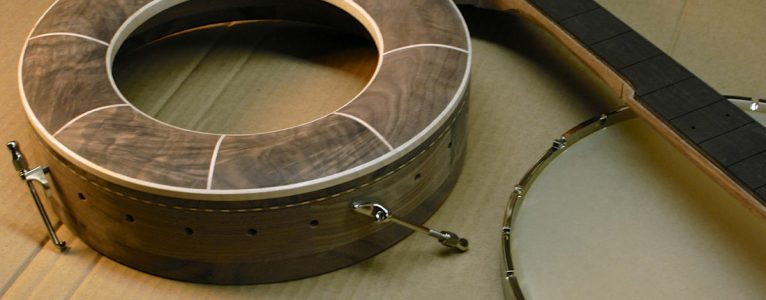
banjo parts
The banjo pot is walnut with a rosewood tone ring.

Several years ago, Amber heard John Hartford playing a banjo that sounded as incredible as his playing. It was mellow without being tubby, and had tons of tone. She did some research and found that the banjo was a modern instrument that featured a wooden tone ring. Continue reading “Don’t Judge Me (I’m Building a Banjo)”

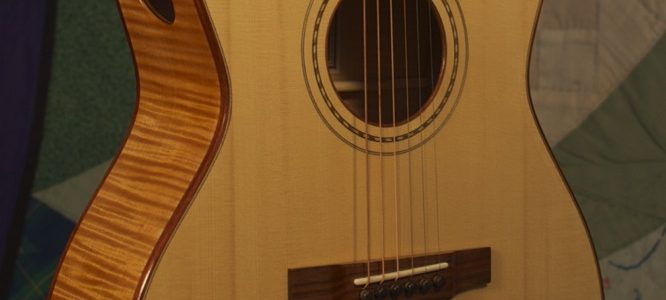
Orchestra guitar no 14 adds a soundport in the side to give the player a rich, direct sound.

I put the finishing touches on two orchestra model guitars around the holidays, and they sounded great right away.

I tweaked a few details from the earlier versions, including making some minor changes to the bracing. About two years ago, I was talking to local violin maker Tom Verdot, who asked about trying some hybridization between the way classical guitar soundboards and steel string soundboards are braced. Continue reading “New Features and a New Model”

This is a wonderfully balanced guitar with great string and note separation. The palo escrito sides and back glow under the French polished finish. In addition, I’ve added a sound port for the player, solving one of my biggest complaints with rosewood guitars: the player can’t gauge the guitar’s sound accurately, especially in loud or large rooms. You’ll know what you’re doing right (and occasionally wrong, maybe) with this guitar. \


Continue reading “Palo Escrito Orchestra”

This is a huge-sounding guitar with a very forward, focused sound. The maple reinforces the trebles, producing the thick mids and trebles that work beautifully for melodic flat- or finger-picking. In addition, I’ve added a sound port for the player which provides a high-resolution picture of what your playing sounds like. (I can’t wait to try out the sound port in a loud, PA-monitor-less dance situation. Maybe I’ll finally be able to tune!)


Continue reading “Red Maple Orchestra”