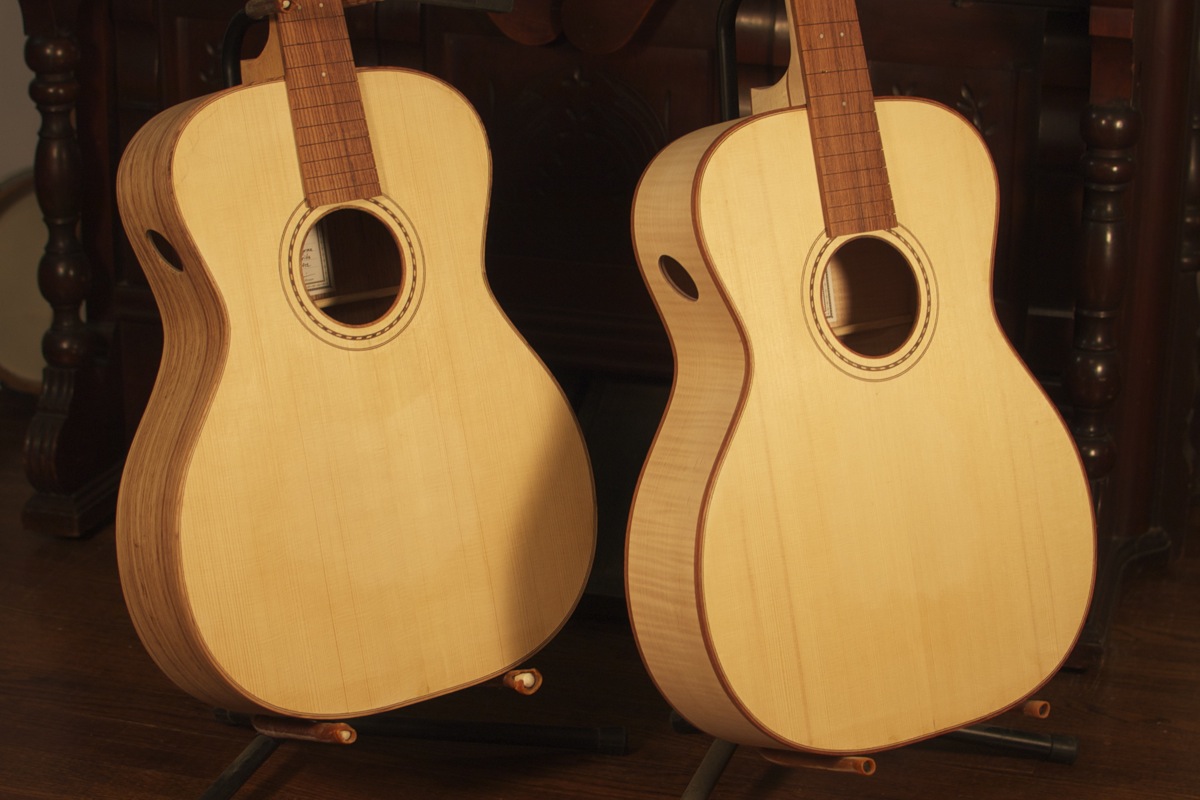
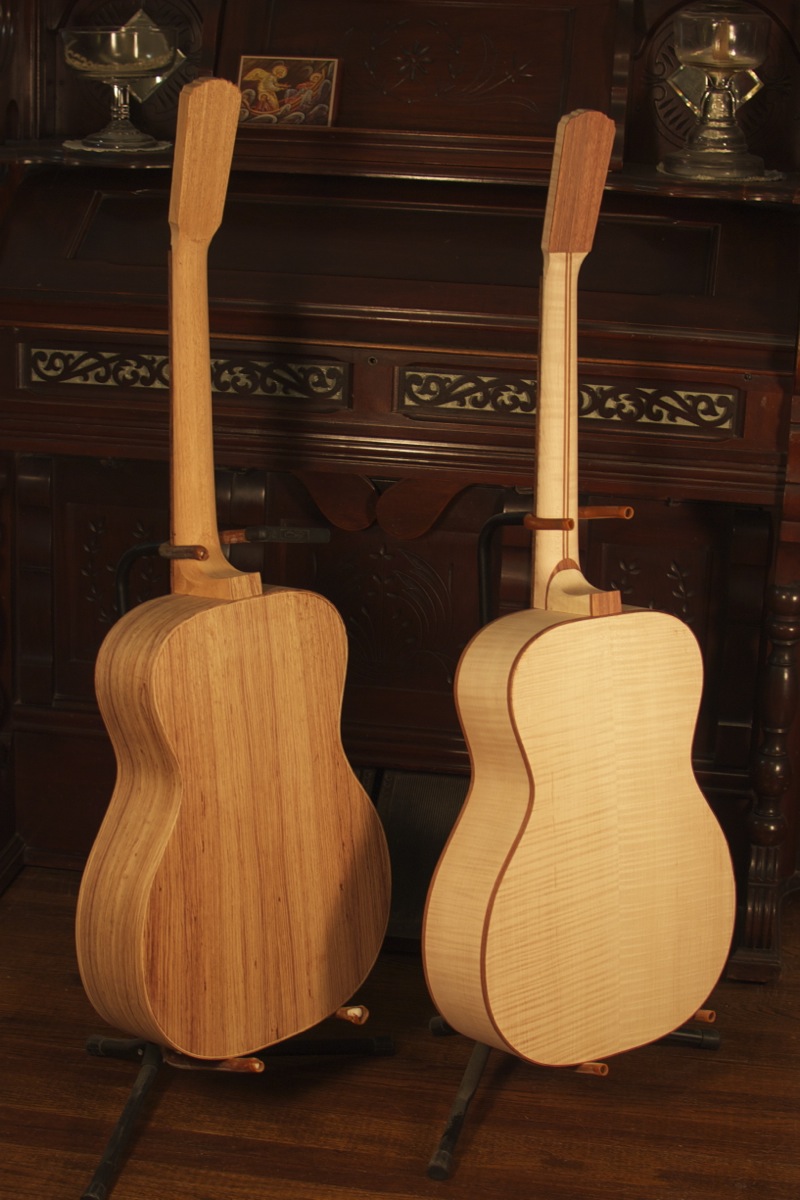
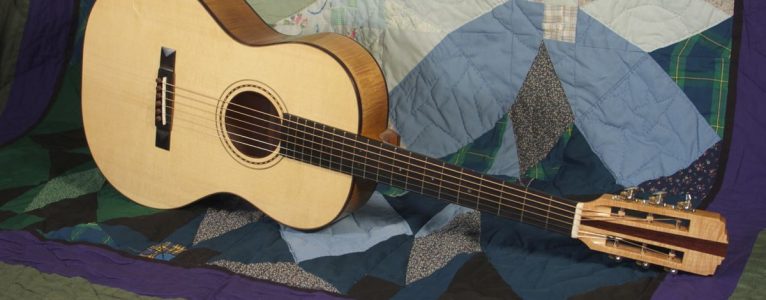
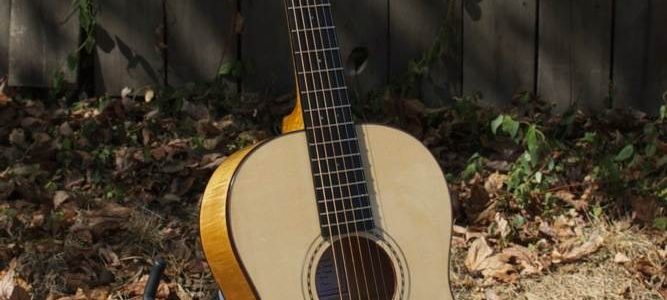
I’m rounding third base on this pair of orchestra model guitars. True to form, I’m building them as an identical pair except for one variable. This time, the difference is the back and sides material; one is red maple, the other is palo escrito, a relatively lightweight rosewood from Mexico. At this point of the build, I’m tapping the top looking for the body to produce a strong fundamental tone with a sustained ring. My impression is that the maple body has a stronger fundamental, but that the rosewood body rings slightly longer. Both sound really good.
New orchestra pair about to be finished.
The guitar on the left is built with palo escrito, the other is red maple.
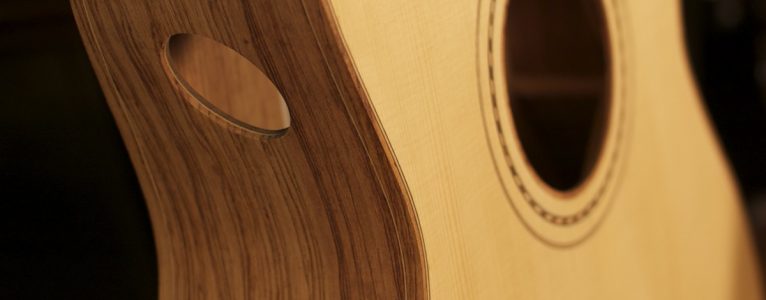
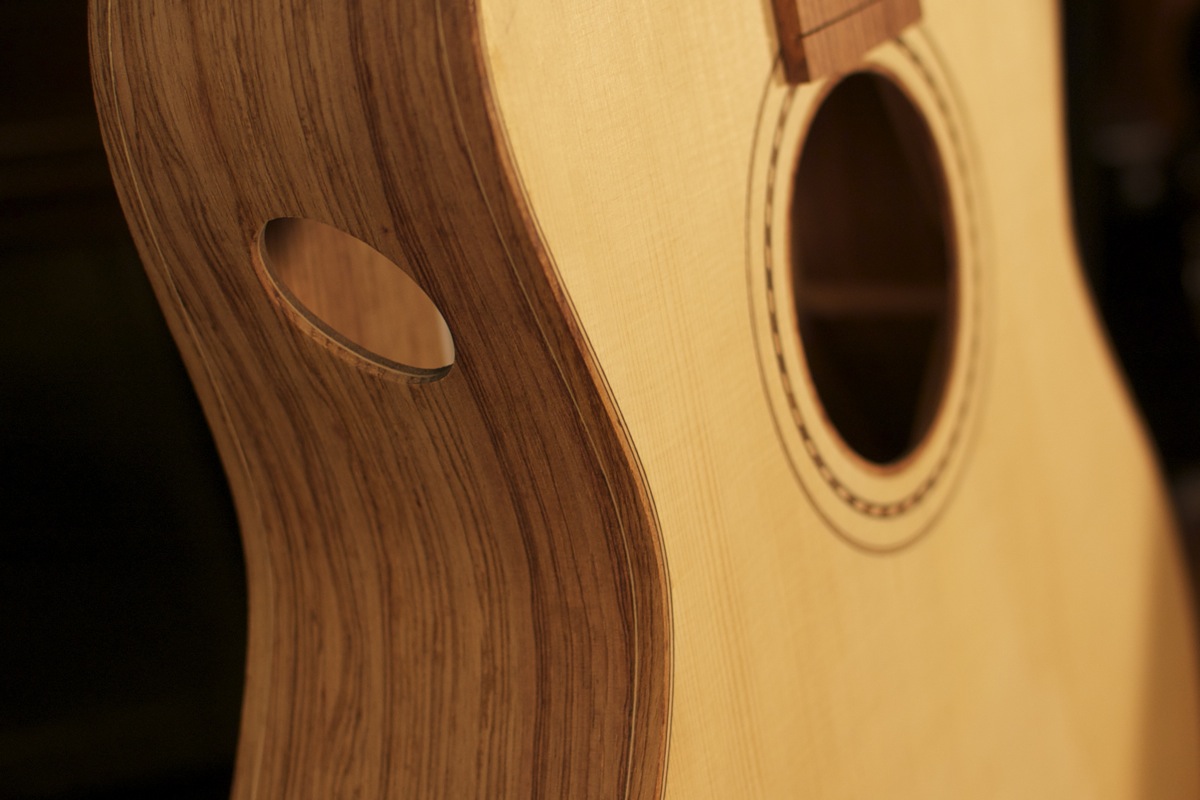
Here’s a shot of the sound port and binding scheme on this palo escrito guitar.
As kids, along with the usual top 40 stuff, my brother and I listened to a lot of tapes made off the radio in Springfield, MO. We loved bluegrass and variety shows like Wayne Glenn (“The Old Record Collector”) and the perennially popular Riders in the Sky (heard on public radio, KSMU).
One particular tape was a favorite. It was an eclectic playlist, including the Andrews sisters and Tim O’Brien, Screamin’ Jay Hawkins and Bob Carlin, and Cryin’ Sam Hutchinson (C-H-I-C-K-E-N!). But our favorite number was called Freight Train Boogie, by the Delmore Brothers. Game changer, even for a ten year old. We wore that tape out. Continue reading “The TG-0 Story”→
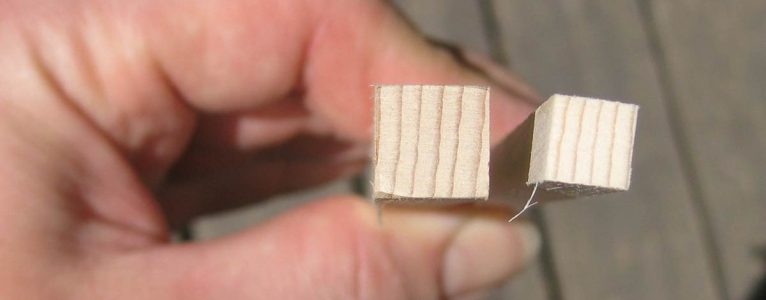
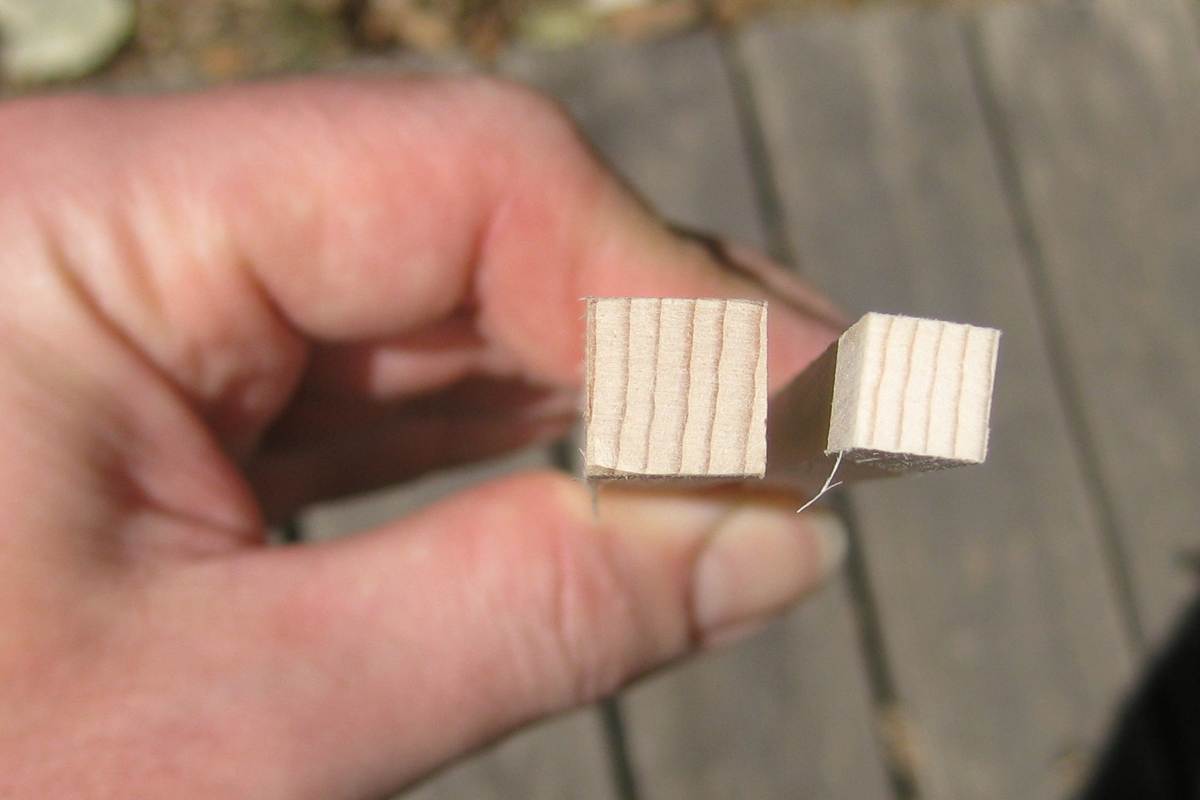
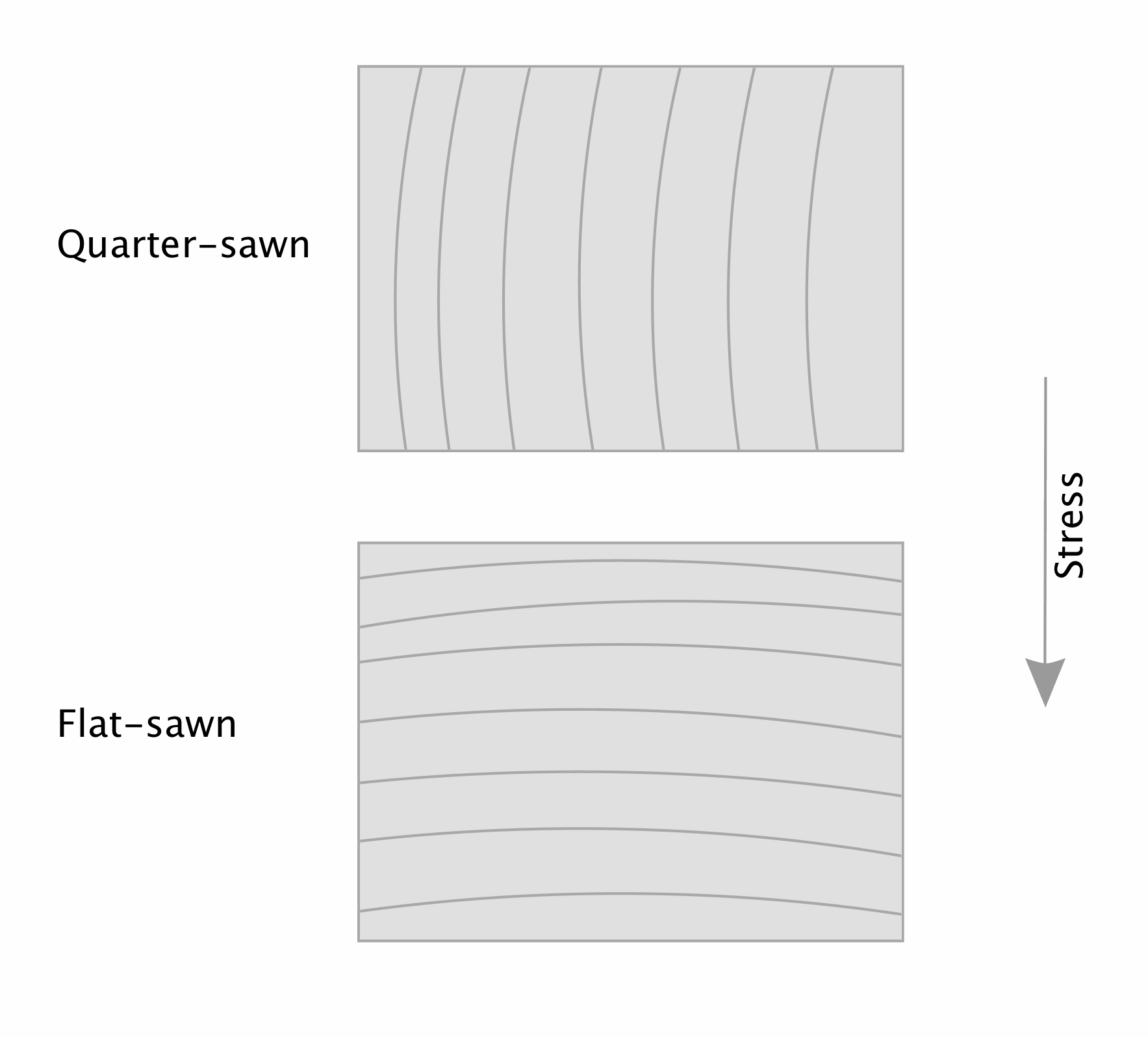
One of the things guitar builders worry about is grain direction. It’s generally agreed that quarter-sawn wood is the most stable, or at least that it moves in a predictable, uniform way when the relative humidity changes. It seems to bend more easily, without breaks, than flat-sawn wood (I prefer quarter-sawn sides and bindings for that reason). And everyone agrees that it is stiffer than flat-sawn timber.
I built this tenor with the melodic players of traditional Irish tunes in mind. It is tuned like a violin, but an octave lower, and uses heavier strings to make flatpicking easier. This small guitar has well-defined bass and sounds pretty cool with wide-open chords as a backup or accompaniment instrument, too. A friend of mine thinks it would be a nice alternative to the typical bouzouki sound for Irish music.
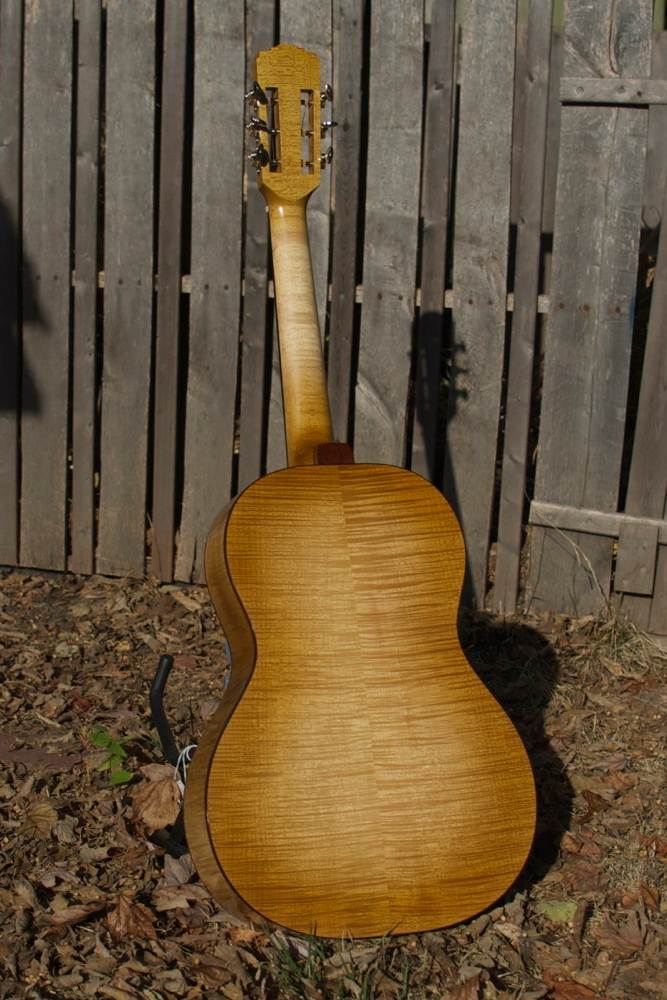
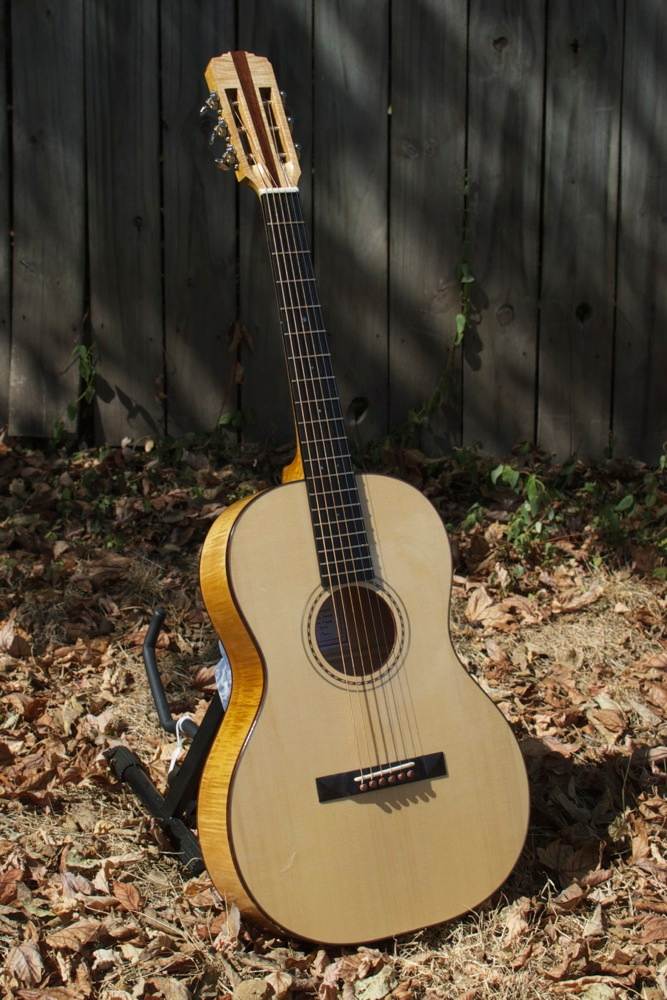
Amber’s parents came up with the perfect name for this lightly shaded, barely-a-sunburst finish: the tea-burst.
The body is finished with a French polish and water-borne varnish sandwich, and the neck is sugar maple with an oil finish. The sugar maple and Adirondack spruce top were supplied by Old Standard in Callaway County.
This grand concert in sugar maple has wonderful tone and clarity, with a feeling of space between the notes. It responds eagerly to a light touch and is very powerful when driven. Amber’s parents came up with the perfect name for this lightly shaded, barely-a-sunburst finish: the tea-burst.
The body is finished with a French polish and water-borne varnish sandwich, and the neck is sugar maple with an oil finish. The sugar maple and Adirondack spruce top were supplied by Old Standard in Callaway County.
Another large guitar measuring 15″ across the lower bout, this guitar has a big, warm sound and retains the singing tone I squeeze out of my smaller guitars, making it an ideal fingerstyle guitar. This is the 12-fret version; the auditorium can be made up as a 14-fret guitar as well. I finished it with a French polish/varnish/French polish sandwich, and the cherry looks incredible. The Adirondack spruce and cherry for this instrument came from Old Standard in Callaway County, Missouri. Continue reading “Auditorium Prototype”→