Preparing the Rim
Once I was satisfied that the adjustable neck design was going to work on a tenor, I was able to get the rim ready to go.
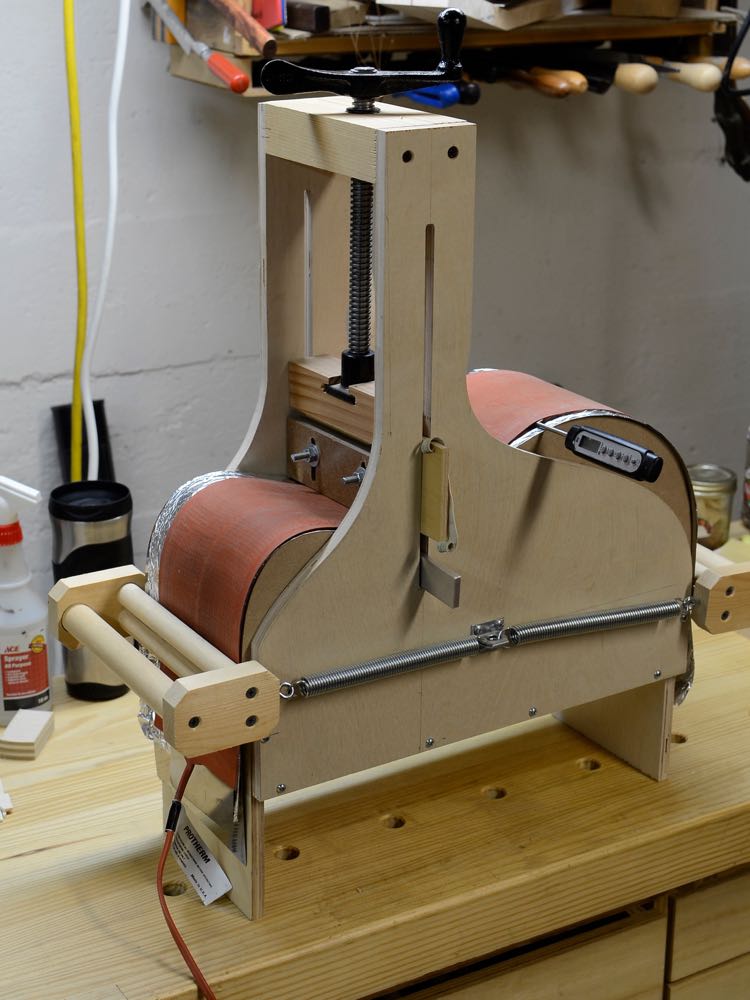
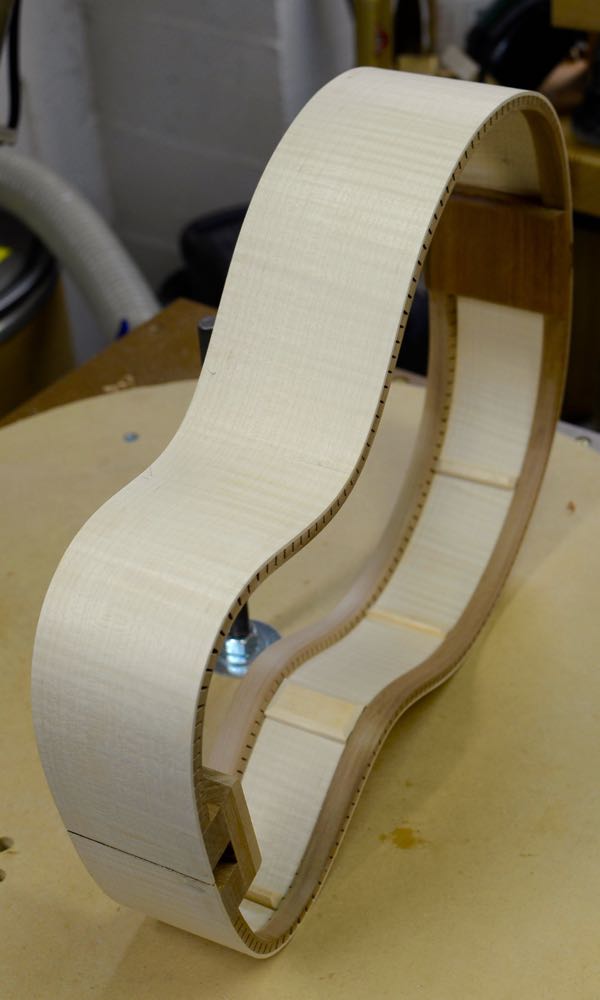
The sides are heated to about 300°F to bend to the tight curves a tenor body requires.
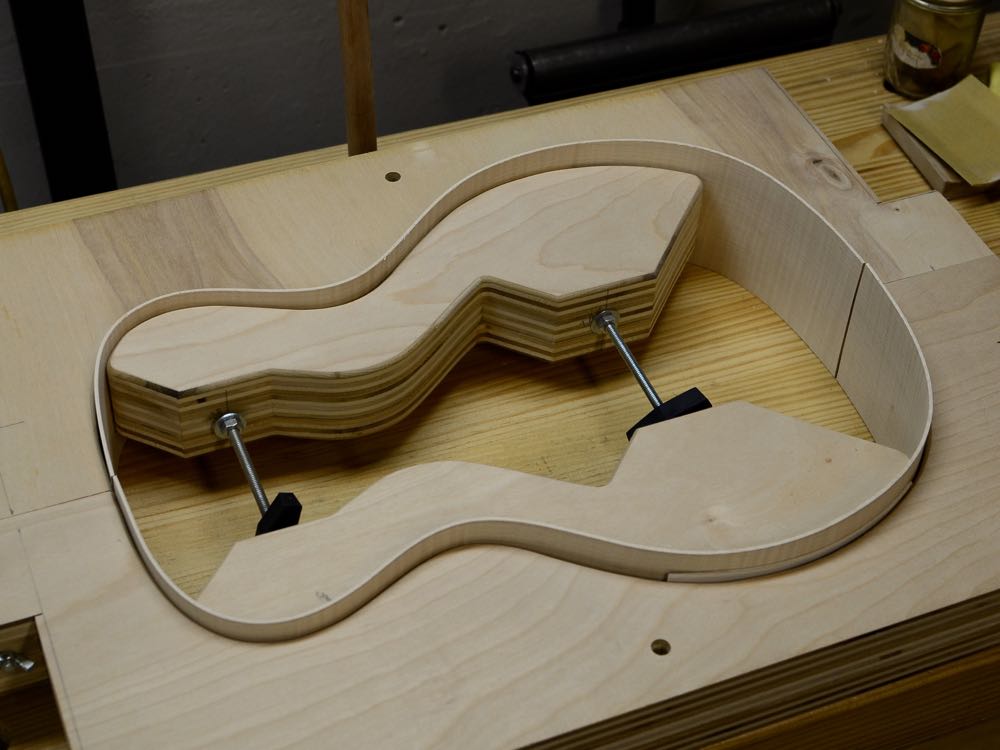
Once bent, then reheated (reheating helps reduce springback), the sides are cut to length and placed in the body mold.
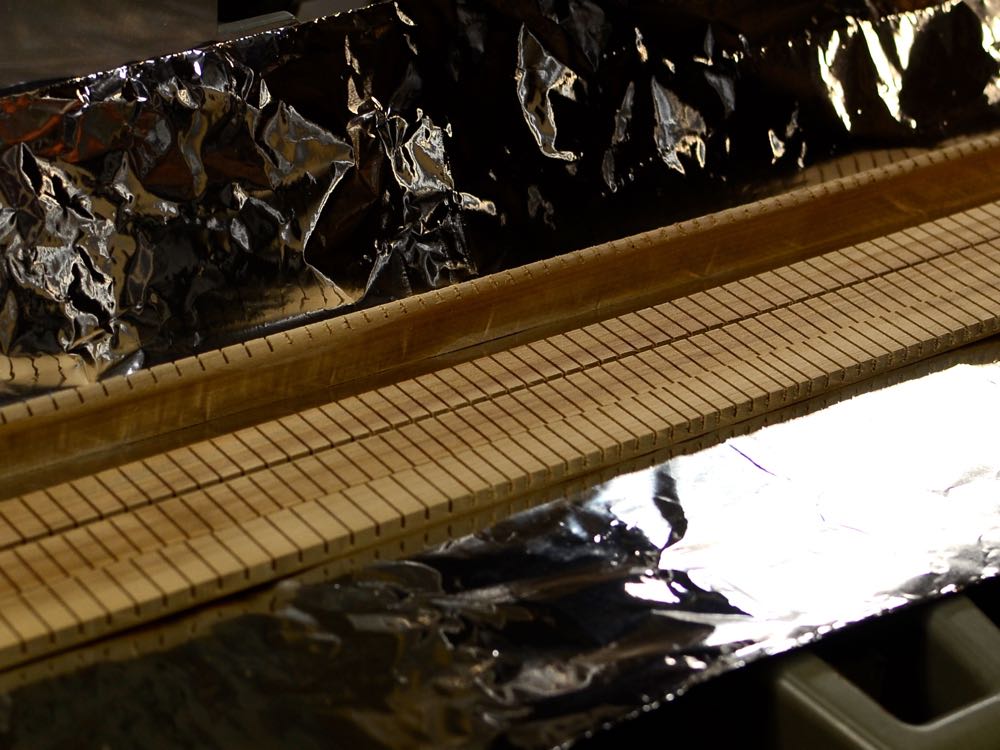
I leave the unkerfed portion of my linings pretty thick to add rigidity to the sides. These are made from willow.
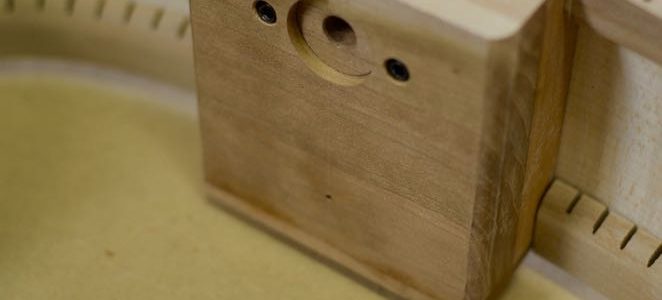
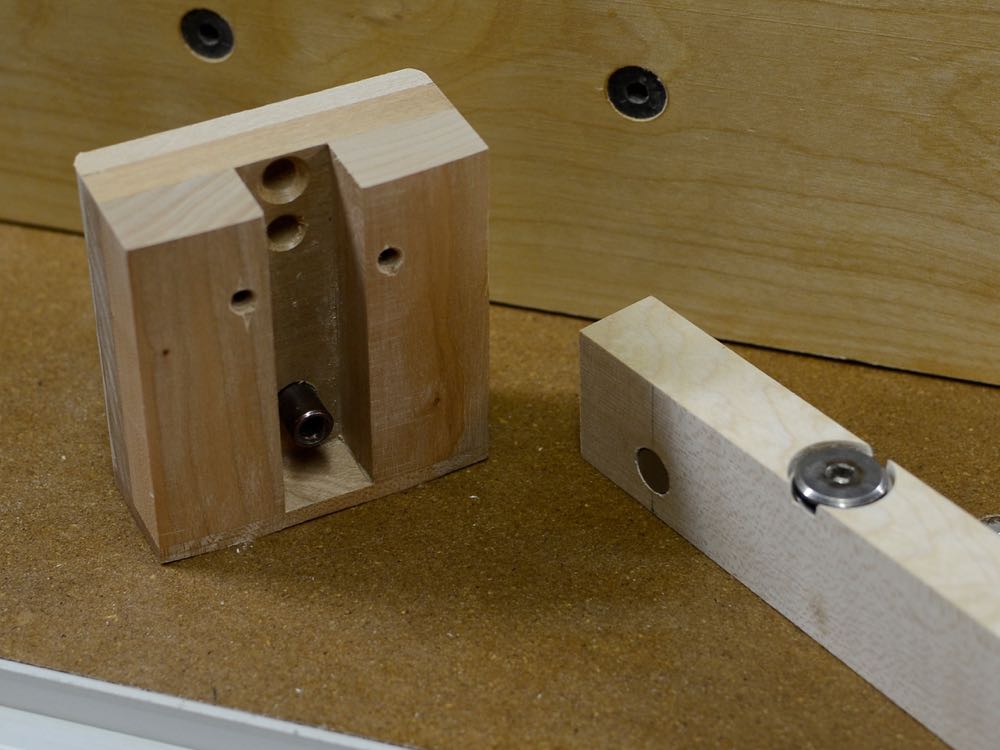
The neck-facing side of the neck block.
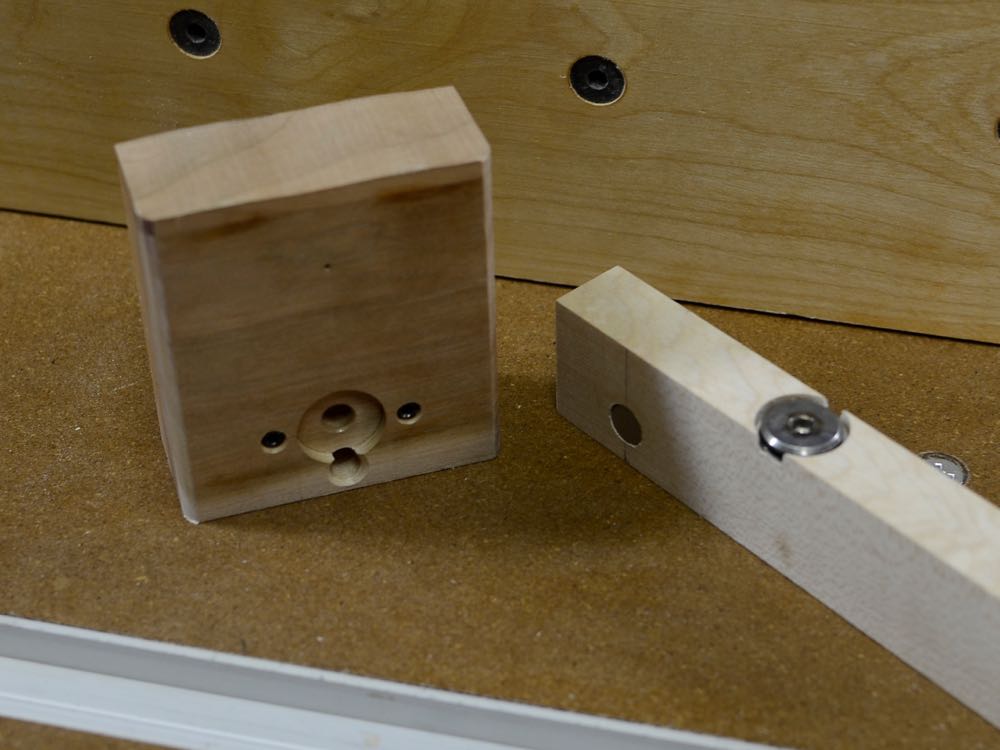
The interior-facing side of the neck block.
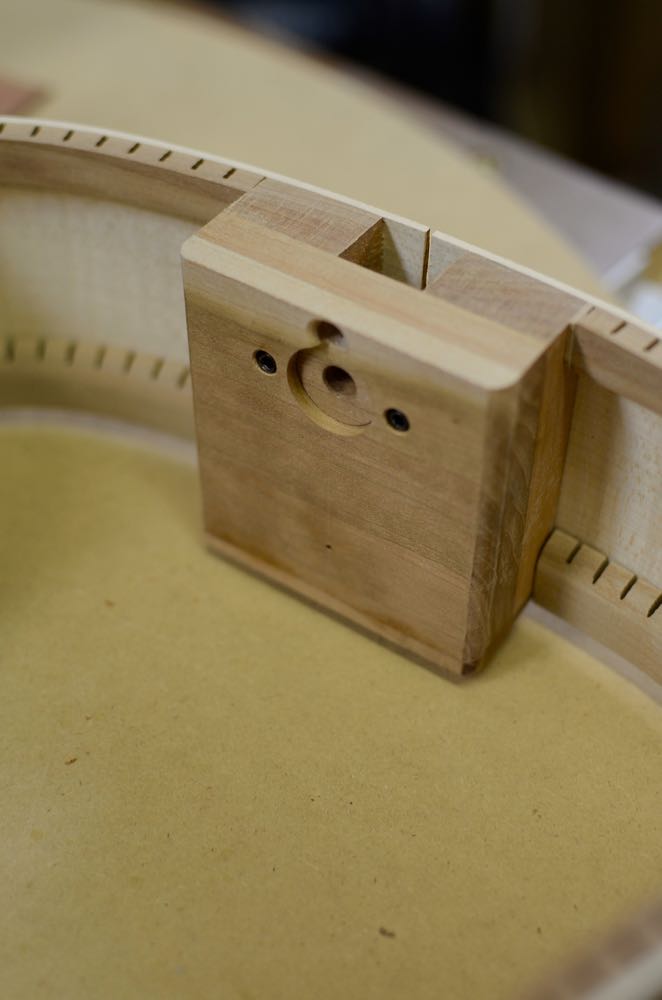
The neck block installed.
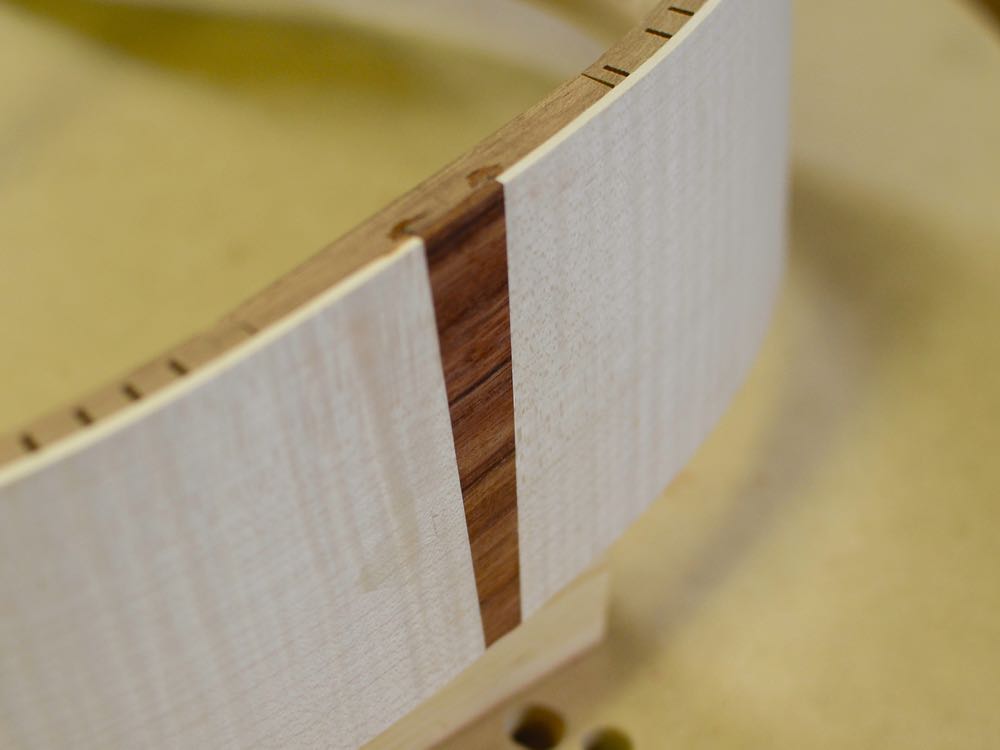
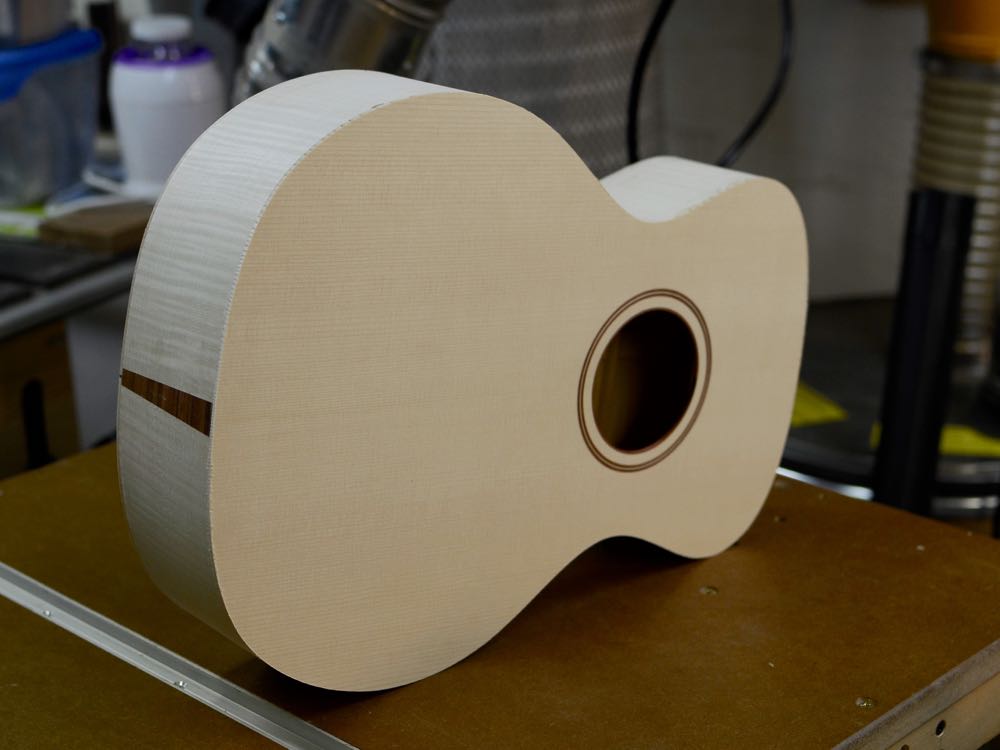
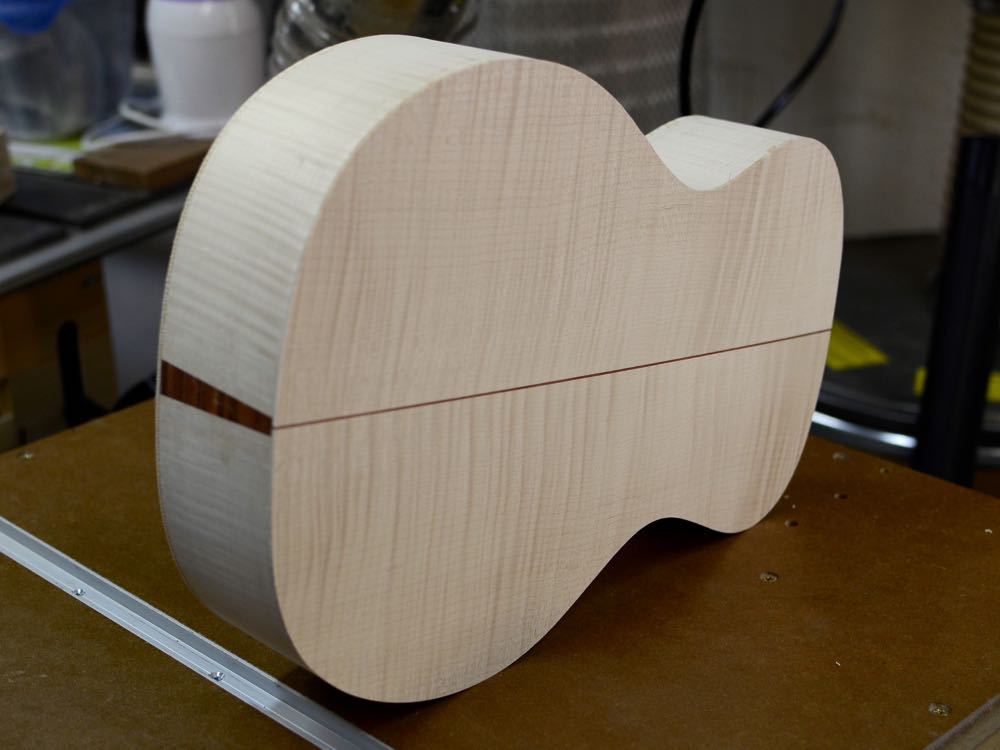
The hormigo end graft is installed and scraped down.
The rim is just about ready to accept a top and back.
Closing the Box and Putting the Neck Together
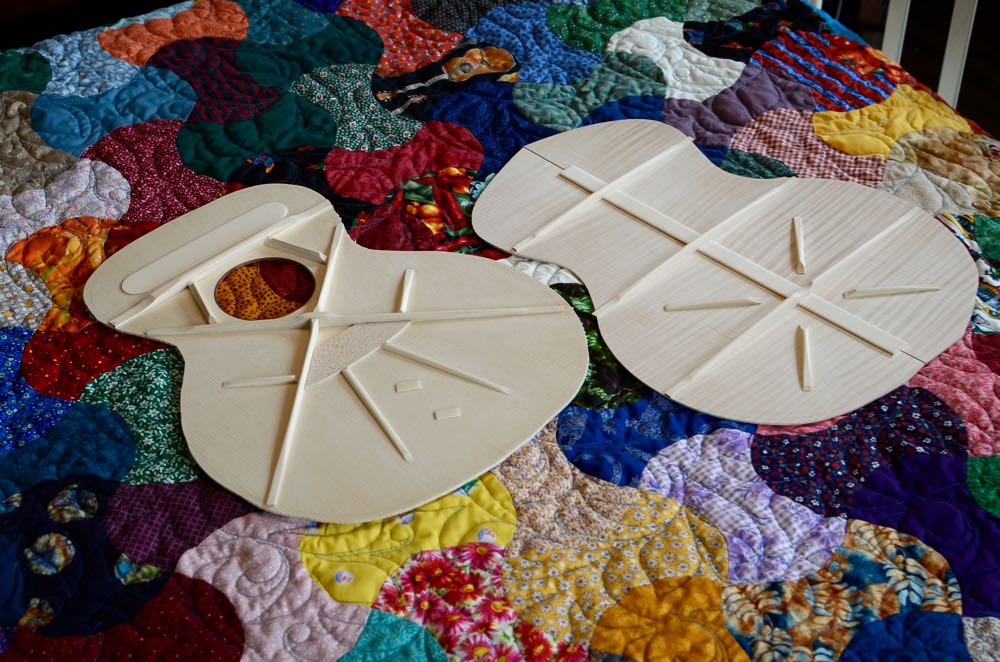
The top and back plate from tenor serial no. 19.
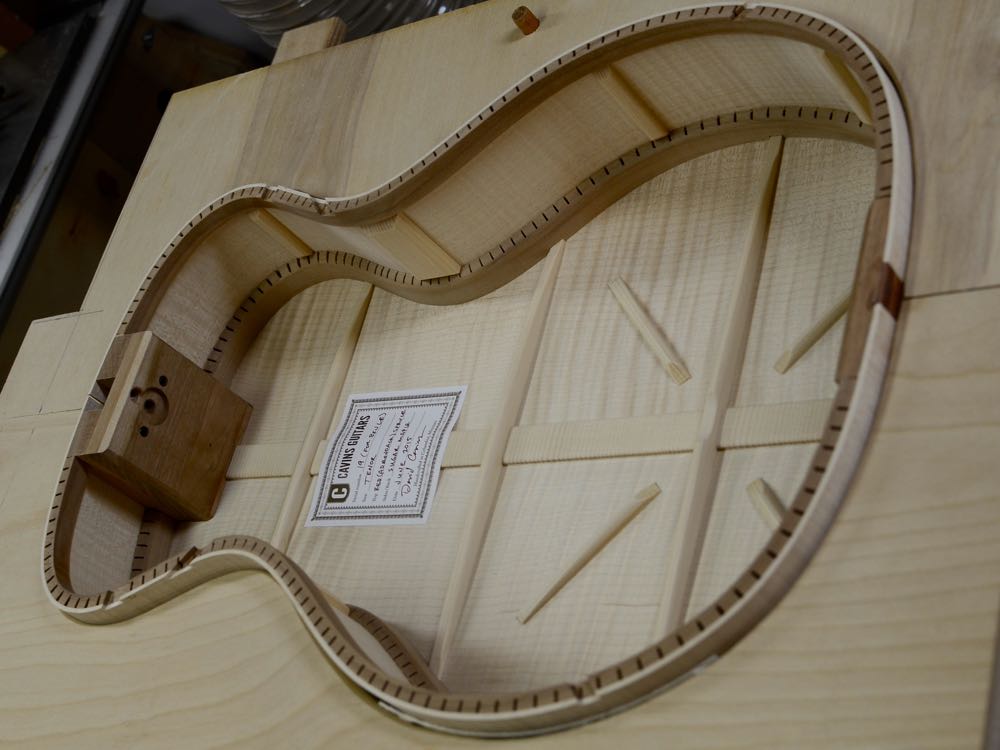
The tenor body awaits its top.
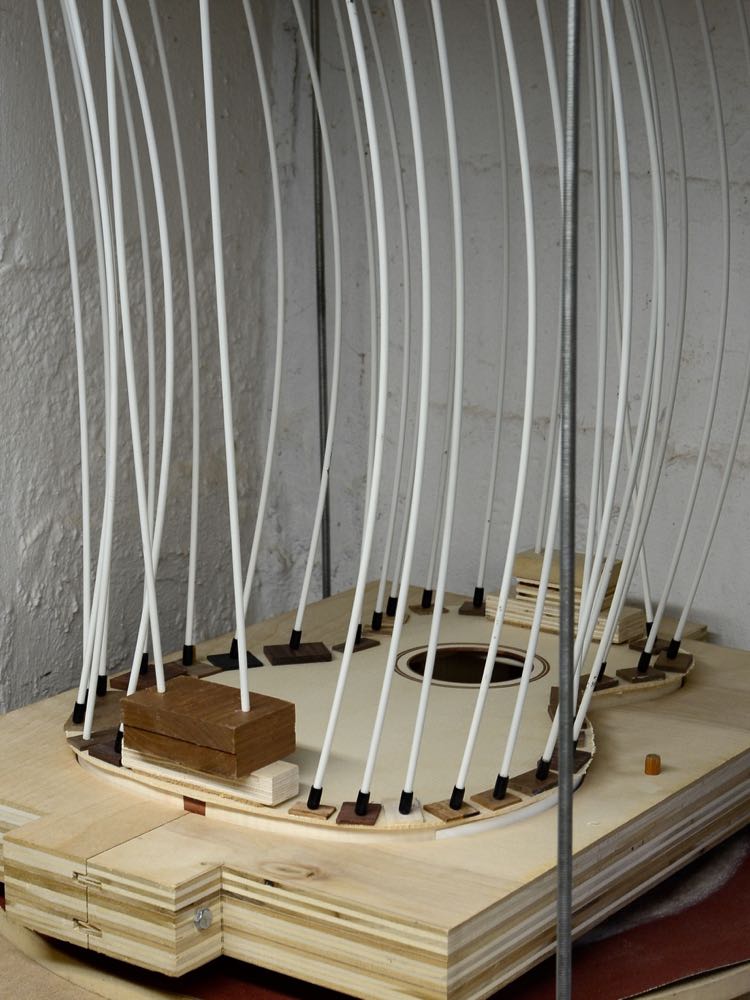
Gluing the top plate onto tenor serial no. 19 in the go-bar deck.
The box is closed!
The box is closed!
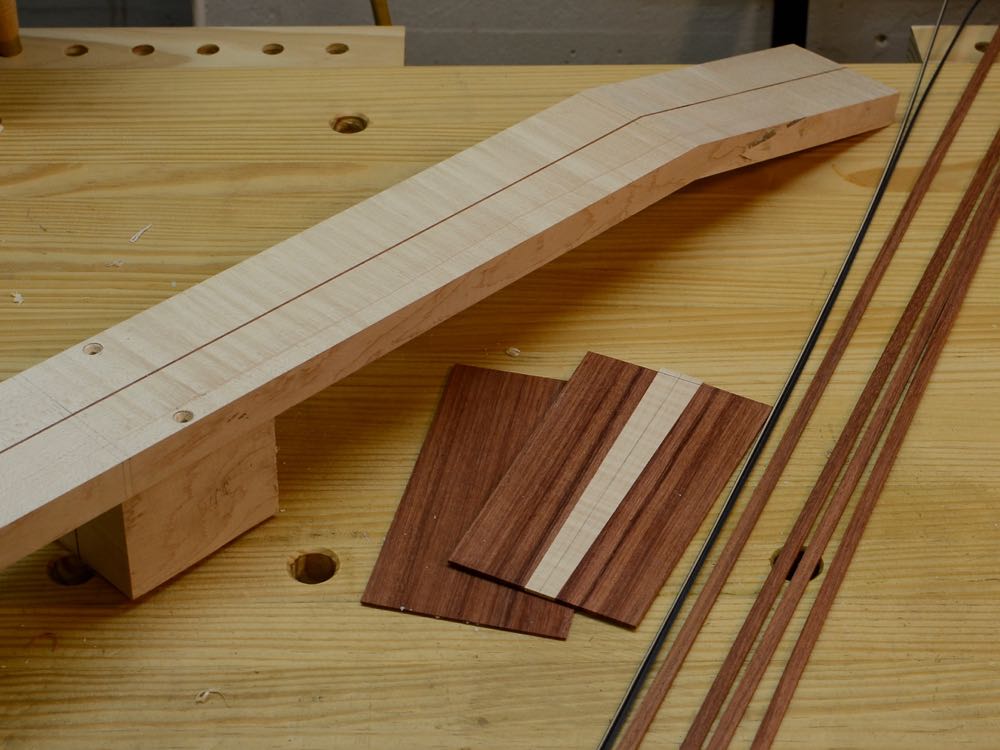
Assembling the neck and preparing the double head plate, binding and purfling.
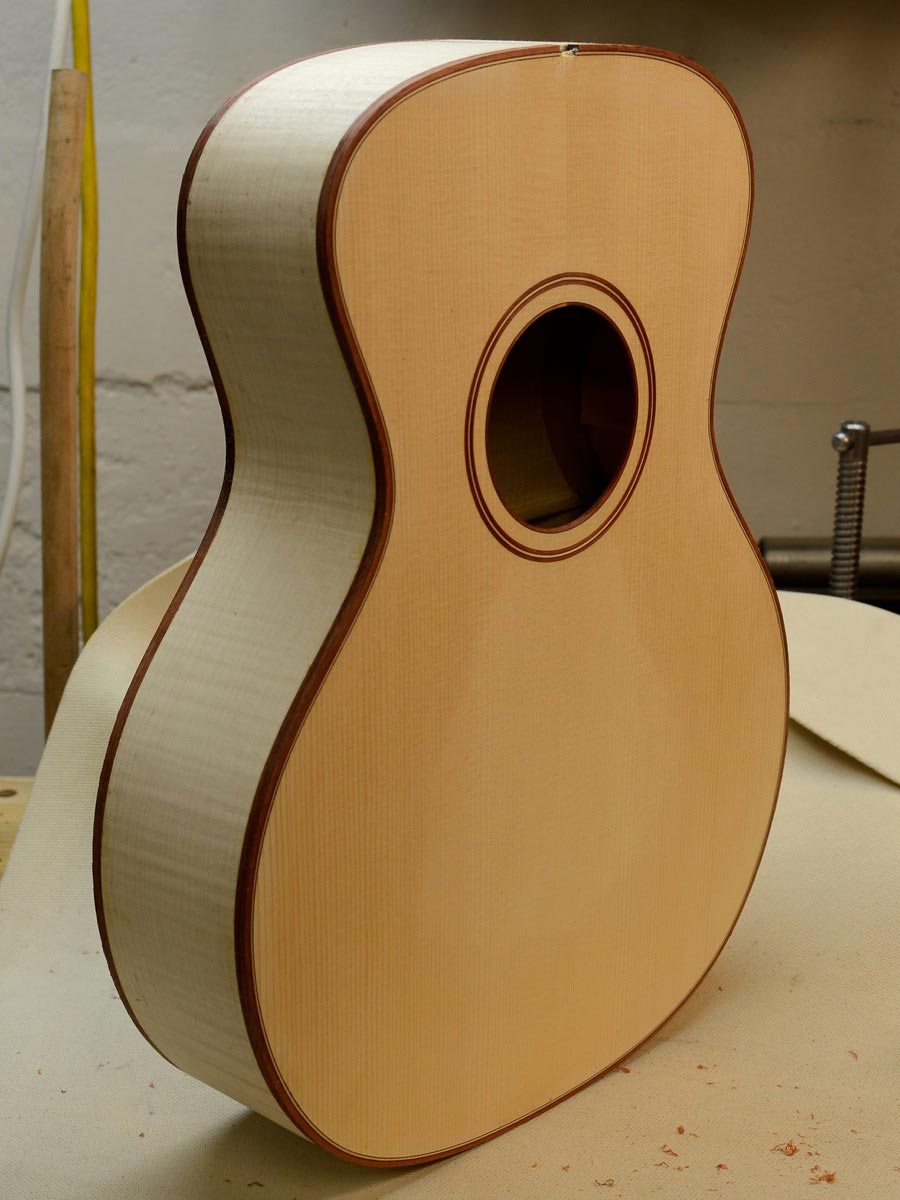
Hormigo binding and violin purfling make an elegant combination.
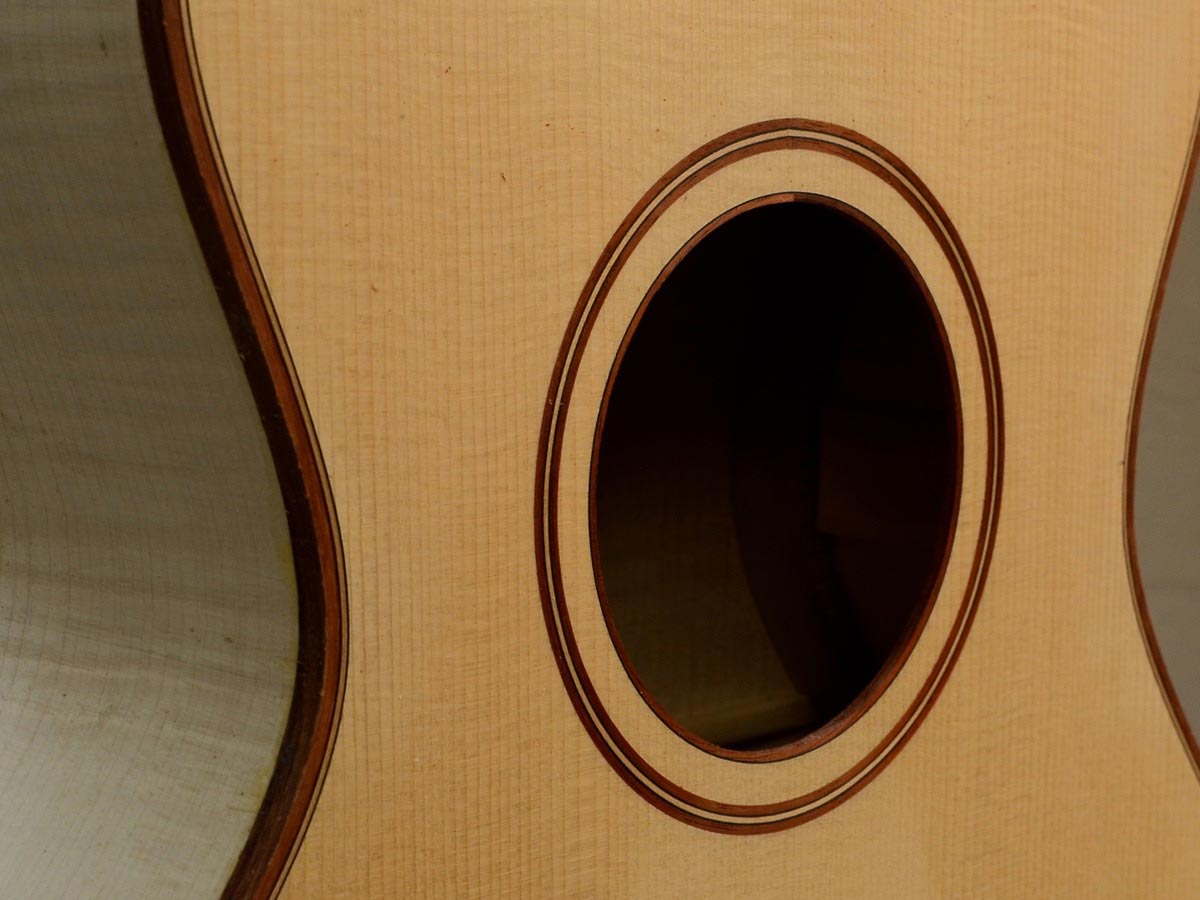
Close-up of the top binding with rosette ring.
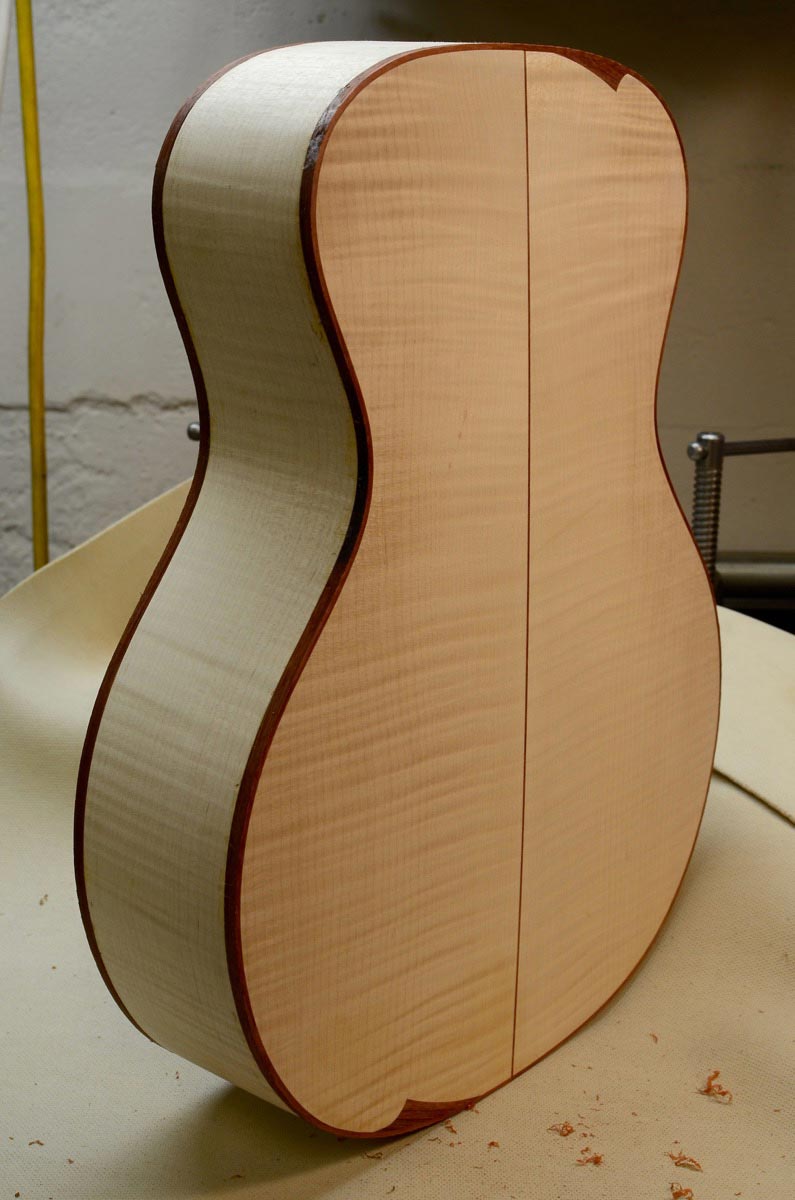
The sugar maple body has a nice crisp outline in hormigo.